What is a bloatware ?
Bloatware is not only a set of applications (mostly hidden) that trend to become lesser and lesser efficient, occupy more and more memory, drain the battery and requires unnecessary CPU power, it is also software that has “undocumented features”, including spying your data, your habits (metadata), and imposes you some contents (such as advertisements). It may also bias your personal choices, by almost imposing you the use of a specific cloud, backup procedure, a specific digital “intelligent” assistant, a specific e-mail system, and so on.
Not only it will reduce the time span of your device, it will also reduce dramatically the quality of your digital experience through the stifle of your solution choices.
I’m not plan to get rid of Android, so what could I do ?
Switching to Apple ecosystem is not a solution, as it is an even more captive, addictive, closed and proprietary environment. Hopefully, Android is a (mainly) FOSS Linux distribution, open to alternative software sources (repositories) and third parties services, as example for mail or backup services.
Thanks the fight of the OpenSource/FreeSoftware community against abusive captive behaviours from major digital players (mainly Google, Microsoft, Apple, … but not only), the entire software load of the smartphones sold with Android included may be replaced. But this operation is not only technically advanced. It is also risky (it may lead to a “bricked” device) and usually voids the vendor warranty. So if you are not an I.C.T. enthusiast, having a spare device you don’t really care about, I don’t advice you to go that way…
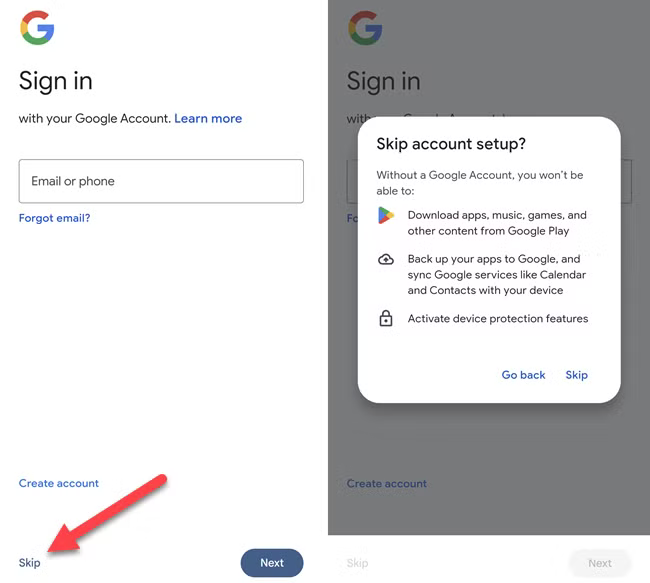
But without a complete re-flash of you device, you can change your habits to avoid unnecessary ads annoyances, imposed services and slow devices experiences. First of all, don’t configure a Google account on your device. Yes, you can refuse to do so. There is no “No thanks” option, but you can select a “Remind me later” or “Skip” alternative, and confirm your choice in a set of following screens, that are there to convince you not to do so.
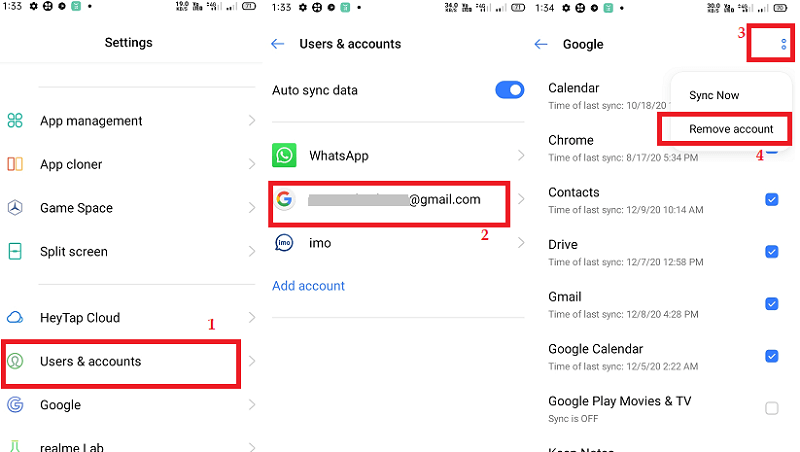
If you did it already, it is possible to remove the Google account from your device, (hoping that Google really respects your freedom of choice and so does not keep a hidden link between your device and your identity).
But, for sure, the best way is to not configure any Google account when configuring your newly purchased device !
If I don’t have a Google account, how can I use Google Play ?
This is a first demonstration of the captive behaviour of those digital majors: if you don’t accept to bind your device with a Google account (and so accept their “Terms of Service”, whatever they are and how they will be amended with time), you can’t install any application, even gratis. Hopefully, this is intentionally misleading and false: you can install whatever application you want on a Android device, without a Google account, but it also means without Google Play.
To do this, you must install an alternative Android repository application, such as F-Droid, or Aptoide.
What are the differences between F-Droid and Aptoide ?
F-Droid (and alternatives such as G-Droid – we are here in the “free world”, so choices are allowed !) only proposes Free Software, meaning applications that allows the user to see the source-code. It may not be meaningful for you, but it changes everything: even if only 1% of the community actually reads the source-code, it makes “undocumented features” impossible to be hidden. It allows the repository to inform you about “Anti-Features” (“features you might not like“) and other issues.
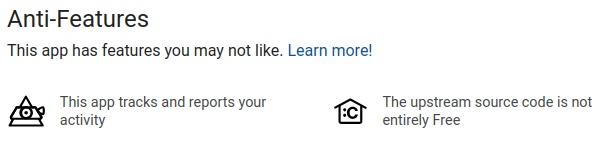
This way, you will no more install any application that will transfer your data, your usage habits, your meta-information to any software vendor or third party, at least without your informed consent.
Think about it: the voting machines case.
During the 2014 European elections, “impossible results” were produced by the belgian electronic voting system, leading to a manual, spontaneous debugging efforts by software engineers, that bring to their home the electronic ballot boxes for a unprepared and unattended nightly fix. Not only this puts the entire results at risk (unattended manipulations of the digital results), but also the final result remained obviously erroneous (mathematically unmatched results). The entire voting was not re-run, as the setting up the new European parliament couldn’t wait.
The choice of the Belgian authorities was to run those voting machines on a proprietary, closed-source software, “for security reasons”. A software that was audited by a third-party certifying company. However, after the issue, they disclosed the source-code, and a software bug was discovered, that explained the incoherent results…
The disclosure of the source-code does not put the security of a system at risk. On the contrary, the publicity of the source-code would have allowed the citizens (at least a part of them) to check the software correctness in advance. This is well known in digital security: a published, proven software code is more reliable than the “security by obscurity”. It is also generally well known that software vendors that do not accept to disclose their source-code (proprietary softwares) are actually hiding weaknesses and flaws of their softwares.
Moreover, with an open-source software, security flaws are usually discovered before exploited and fixes (security patches) are applied much more rapidly.
So in all cases, prefer software that publishes its source-code: they don’t have hidden features, they are likely checked by the community, and so they are more reliable.
What about Aptoide
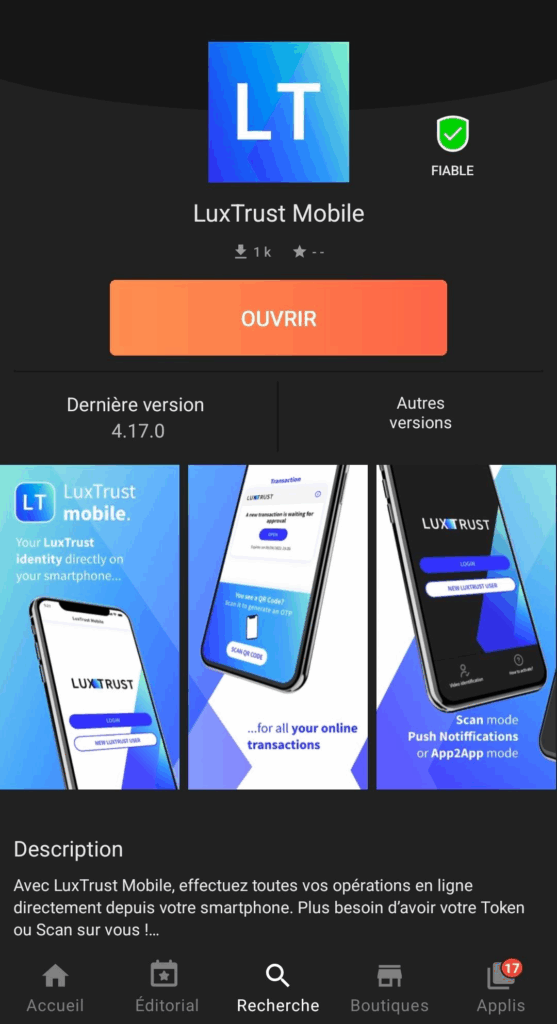
Aptoide is an another software repository application, that allows you to also install proprietary applications. It is so to be avoided whenever possible, but unfortunately, some service providers (such as banks) are not yet aware of the advantages of open-source principles. In such cases, you can use it to install “mandatory” applications that are obviously not available on F-Droid, such as:
- LuxTrust
- Guichet.lu
- CMCM
- …
What application are useful to replace, as example, GMail or Google Maps ?
Gmail may be replaced by Thunderbird, available through F-Droid:
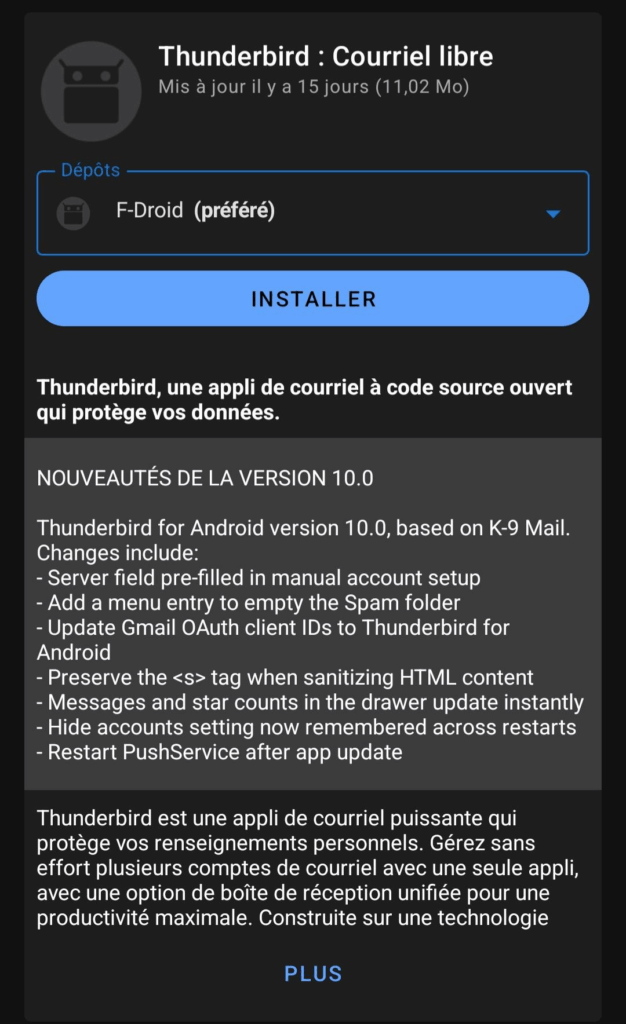
Thunderbird offers much more features than GMail, including the possibility to configure multiple e-mail services at once, download the latest e-mails unattended, to that they are locally available even without network connection, and so on.
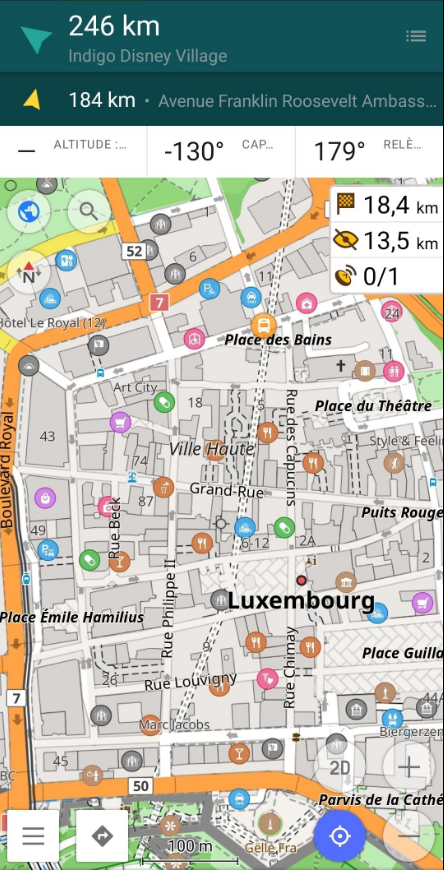
Google Maps may be replaced by OSMAnd, that has also numerous advantages
- offline use (you can download entire countries by WiFi before you travel, to avoid expensive roaming costs and lags in no coverage areas)
- choice between various routing engines, also for bikes or pedestrians, taking in account ground gradients
- much more reliable: up-to-date maps, thanks the community efforts
- supplementary “maps” (features) such as Wikipedia geographical articles, allowing a clever visit of sites, cities, without need of mobile data services
- much more options than Google maps
- no tracking of your position by foreign companies or secret services
- possibility to load foreign languages in advance, so that you may switch to your driver own language when abroad (China, India, Russia, …)
- And much more
The Web Browser may be replaced by numerous alternatives, such as the Firefox flavour: Fenneck, or the very secure and privacy-respecting Thor browser, some less paranoiac tools, such as Privacy Browser. a fully FOSS-compliant web browser, and so on. Yes, we are in the Free World, where freedom of choice still exists !
For the ones that wish a Chrome-compatible browser, you may try also Brave, available on Aptoide.
Other application you may enjoy:
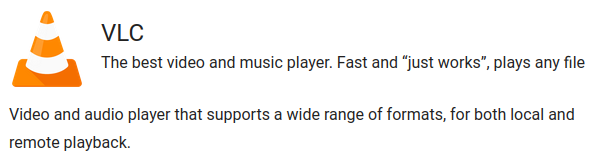
VLC, the universal video/audio player
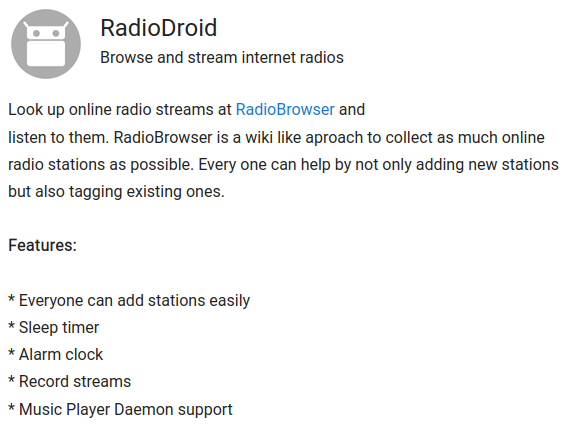
RadioDroid, a universal radio-streams client, allowing world-wide radio channel listening.
AntennaPod, the universal client for podcasts, allowing automatic nightly downloads, bringing you the channels you want to listen to available in cars, sport, office, bike, … without network connexion issues.
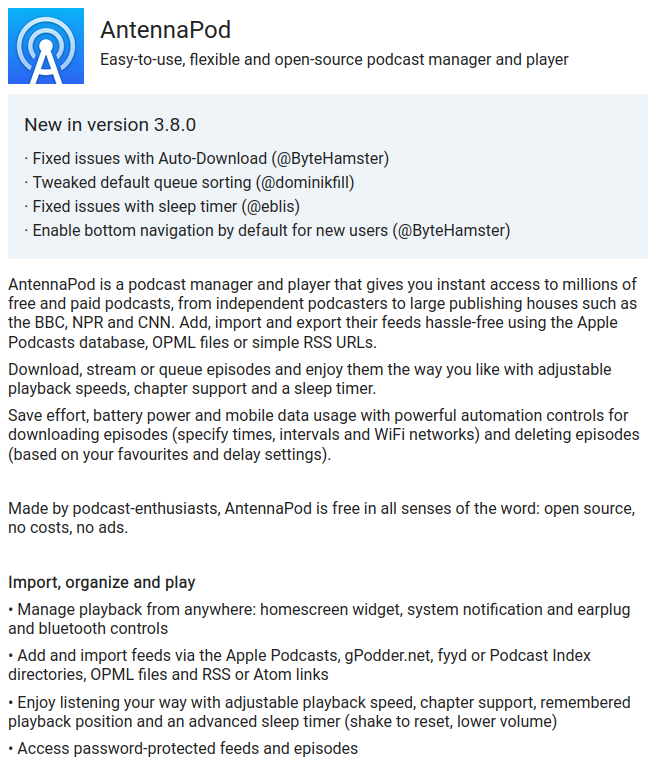
Please enjoy this advice page on about to use AntennaPod and the RSS feeds to keep feeding your brain with selected, high quality content harassment-free !
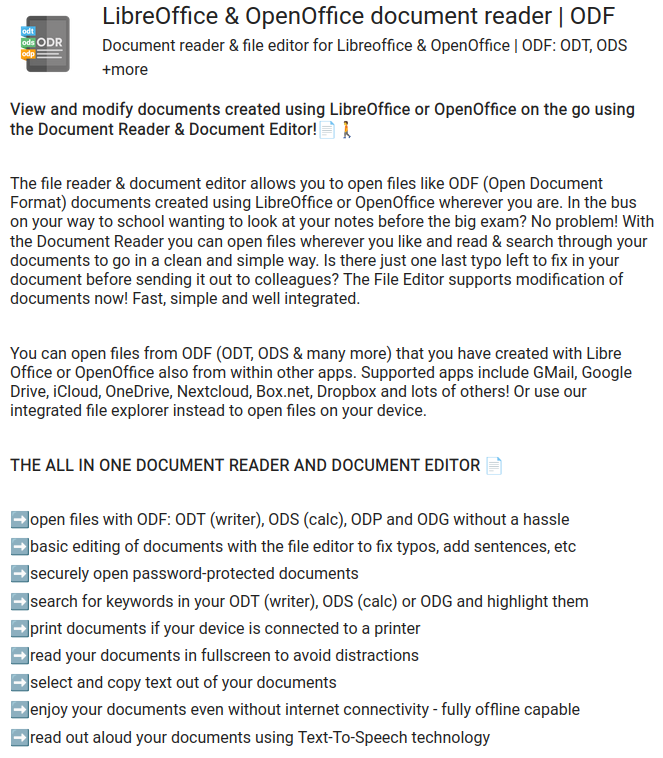
OpenDocument reader, a almost universal reader, that opens up to Photoshop or Autocad native files, but also bitmap pictures, Microsoft Office proprietary formats, PDF, ZIP, Apple iWork formats, and much more !
Through Aptoide (and other alternatives, such as direct APK file downloads), you may replace the Whatsapp spyware by Signal, which is known now as advised even by the US defence department, the Pentagon !
You may also call the world, without relying on Skype (dead) on plain phone numbers, from your mobile, using only your data service (Wifi or mobile), using a regular SIP client, such as Linphone:
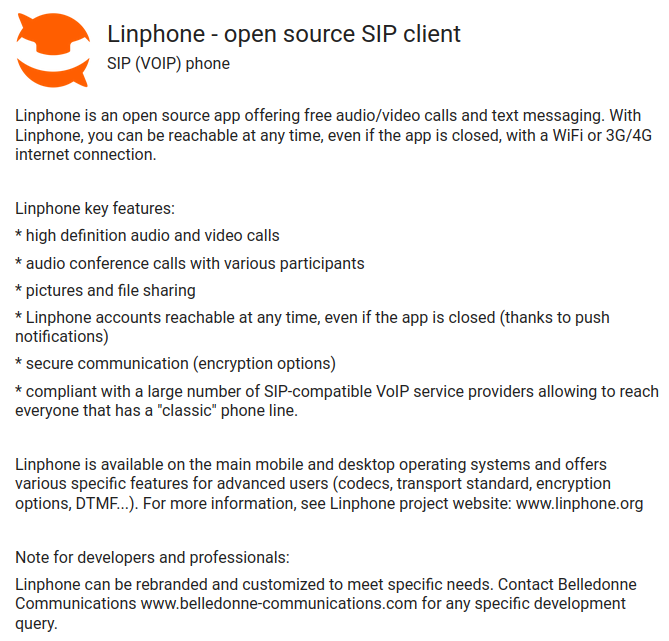
Depending on your SIP service provider, you may enjoy the best rates for extra-long distance calls (China, India, Brazil, Africa, Oceania, …):
https://www.voiprates.info
http://progx.ch/PROGX_WEB/UK/all-rates-voip-comparator.awp
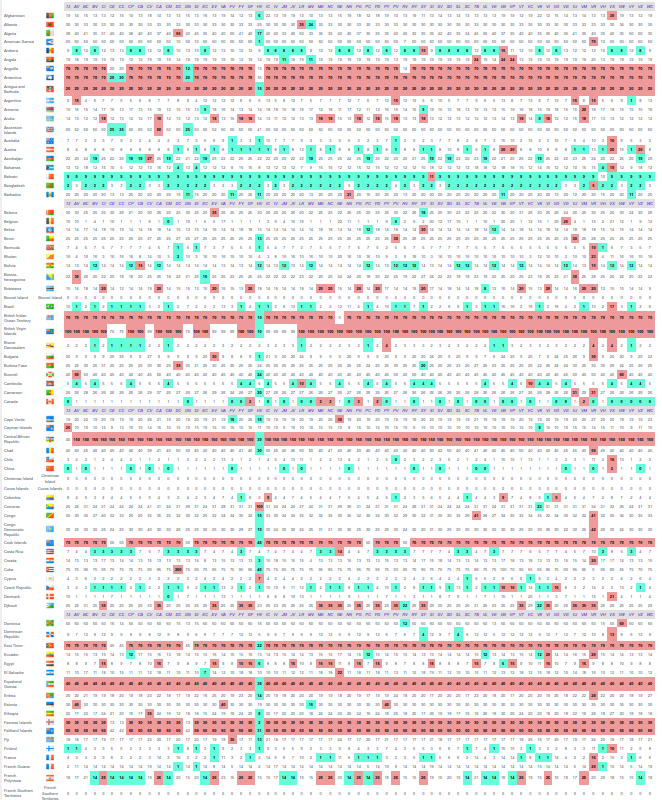
It allows you also to call back to Luxembourg from very remote locations at affordable costs (Dominical Republic, …), and even to be callable on a fixe line number wherever you may be !
There is about no limit about what you may do with a OpenSource/FreeSoftware running smartphone, but being tracked, annoyed by boring unsolicited ads or contractual constraints.
A clever Android user is free, has choice and is full of very powerful, gratis applications.
Please enjoy and share your preferred FOSS mobile applications with us !